
What is a Monkey?
A monkey is a tailed primate that generally has a narrow chest and other skeletal features that differentiate it from an ape. Most monkeys live in tropical forests and traverse on all fours while seeking vegetation, eggs, insects, and smaller animals to consume.
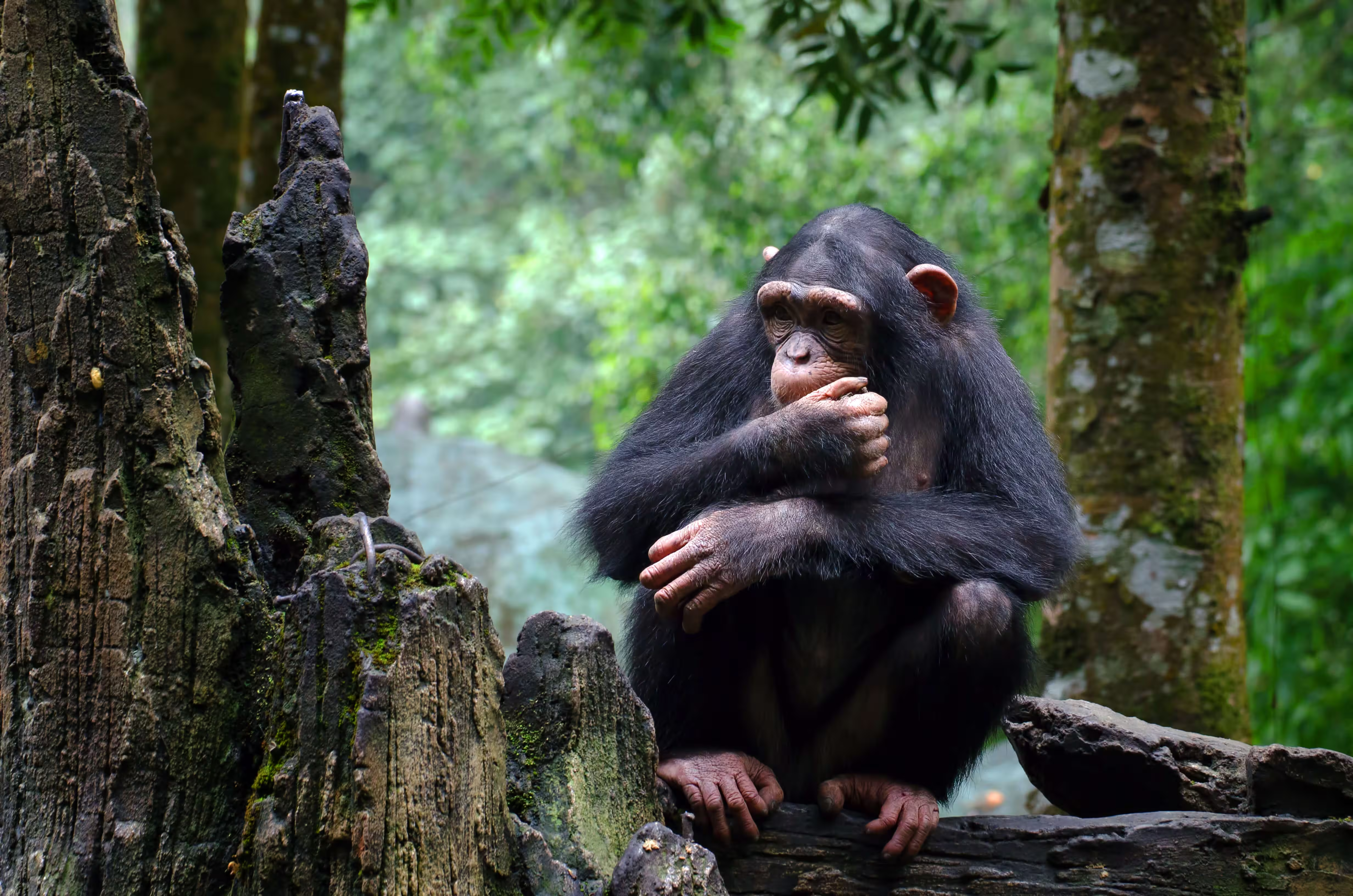
Monkeys are divided into two groups: Old World and New World. Old World monkeys (which are related to apes and humans) have narrow noses with downward-facing nostrils. New World monkeys have broad noses and outward-directed nostrils. Old World monkeys live in Africa and Asia, while New World monkeys primarily live in tropical South America.
Monkeys are social animals that live in troops. They have large brains and are known for their intelligence, problem-solving skills, and inquisitiveness.
Where Do Monkeys Live?
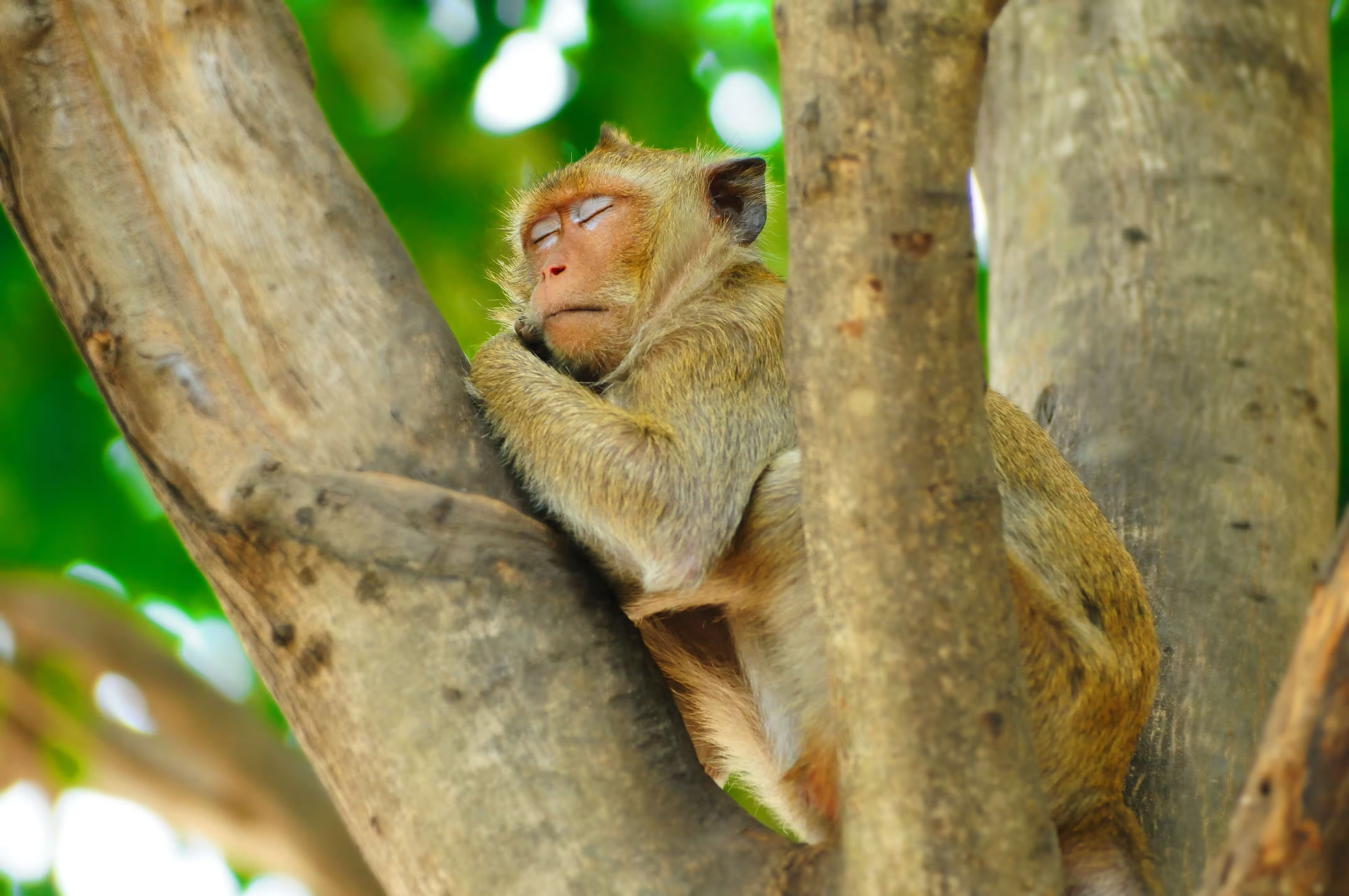
Monkeys primarily live in the tropical areas of Africa, India, Southeast Asia, and South America. They can also be found at a considerable vertical range.
Old World monkeys are mostly found throughout Africa, on the Red Sea coast of Arabia, and in Asia from Afghanistan to Japan, and southeast to the islands of the Philippines. New World monkeys are mostly found in tropical South America (especially the Amazon rainforests). Some species can be found as far north as southern Mexico or northern Argentina. Savanna-living primates can be found in the tropical grasslands of Africa and Asia.
How Do Monkeys Differ from Apes?
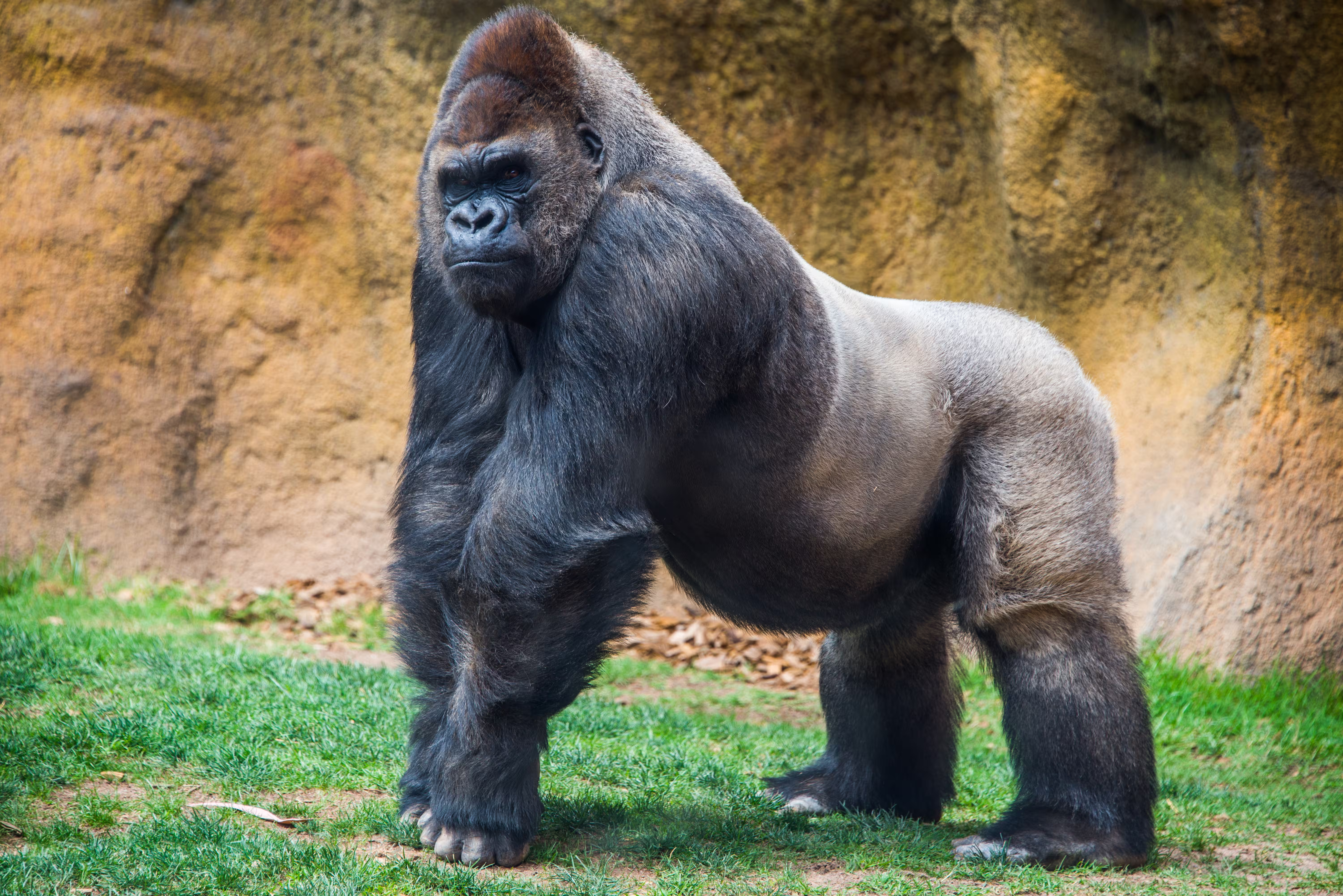
Both monkeys and apes are primates, but they possess distinct characteristics. A big difference lies in the tail; most monkeys have tails, while apes do not. Other differences include the size and chest structure; monkeys are generally smaller with narrow chests, whereas apes are larger with broad chests and shoulder joints adapted for swinging through trees. Apes also have an appendix, which monkeys lack. In terms of intelligence, apes are generally more intelligent than monkeys, and most apes use tools.
Why Are Monkeys Important?
Monkeys are important for many reasons. First, monkeys eat fruits and disperse the seeds in their feces, which helps in plant propagation and helps flowering plants to diversify. Monkeys influence forest regeneration through seed dispersal and interactions with other organisms and the environment.
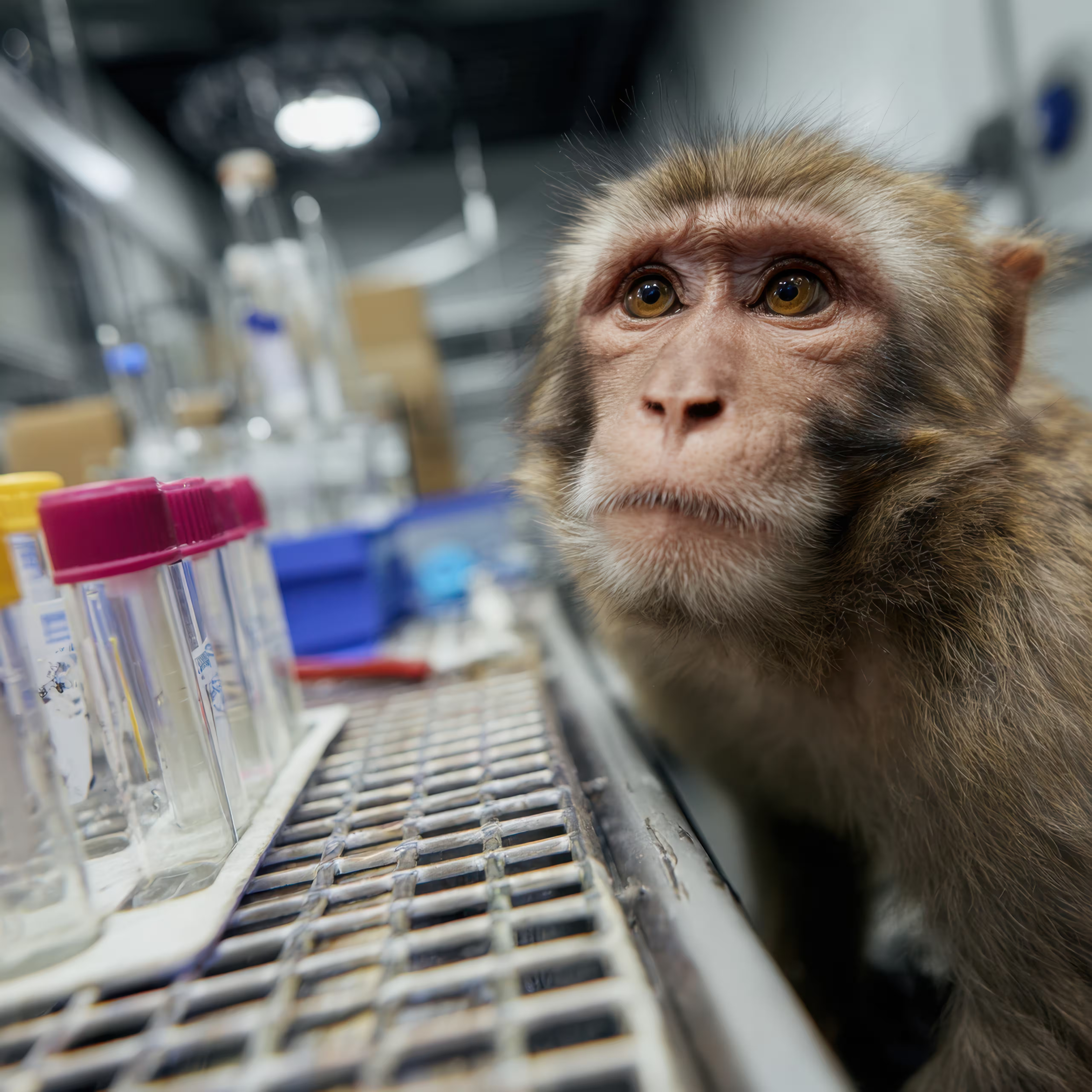
Second, monkeys are used in research to study human diseases, produce vaccines, test drugs, and conduct clinical trials. They are also valuable in fields like endocrinology, neurology, psychology, and sociology, providing insights into human biology and behavior (since they are very similar to humans genetically).
Third, monkeys hold cultural significance. In some cultures, particularly in Asian countries, monkeys are regarded with respect and even worship.